under review
DeathPaths: Migrant Workers’ Passing in the Gulf Cooperation Council (GCC) Countries (ERC Synergy grant proposal, together with Dr. Magdalena Suerbaum, and Dr. Jaafar Alloul)
Focusing on workers from North Africa, West Asia, South Asia, and Southeast Asia, DeathPaths adopts a comparative, cross-regional, and interdisciplinary design linking political anthropology, migration studies, gender studies, and political science. Organised into three interrelated work packages, the project traces the entire trajectory of dying, death, and after-death processes in the GCC countries and beyond, and it will integrate 14 individual ethnographic case studies through PI, PhD and postdoctoral research projects.
2025 – 2028
Kinship Generations: Ethnographic Perspectives from across Africa, Asia and the Middle East (scientific research network funded by the German Research Foundation (DFG), together with Dr. Magdalena Suerbaum)

Kinship, once perceived by anthropologists as a relic of the past, has not lost its significance in our increasingly globalised contemporary world. In fact, for many people, kinship remains the most important way to express how they relate to the world and find their place in it. At the same time, generation, as a way of talking about historical periods, social movements, differences between ‘young’ and ‘old’, or social change and reproduction, has captured the public’s imagination time and again. Contemporary heated public discussions about generations X, Y, and Z, their world views, and their expectations for the future offer an example of the ongoing social relevance of the term and category of generation.
By taking a closer look at how kinship and generations mutually constitute each other, the network—Kinship Generations—strives to achieve not only conceptual clarity as far as generations is concerned, but also to provide fresh insights into social generativity from cross-cultural perspectives. Adopting a processual approach, the network of scholars involved in this project perceive kinship as ‘a fraught and formative field in which meanings are constantly being made and unmade’ (Jackson 2017, 102). Similarly, in relation to generation, the network favours a dynamic understanding, maintaining that generations are not only about the reproduction of social structures but also about change and social transformations. Moreover, by conceiving the term kinship generations, the network intends to take advantage of a productive double connotation: on the one hand, the concept of kinship generations allows for posing questions about how kinship is continually shaped and reshaped in a constantly changing world, all the while generating new meanings about the world. On the other hand, with kinship generations the network seeks to explore what constitutes generations within shifting fields of relatedness and how generations contribute to making and remaking kinship in unpredictable ways. In other words, we are interested in social ‘generativity’ (Bear et al. 2015), which emerges through the interrelation of kinship and generations in correspondence with larger historical, social, economic, and political processes.
Through the network, we seek to enable in-depth exchanges among anthropologists whose work centres on localities in Africa, Asia, and the Middle East (as well as their corresponding diasporas). Sharing and learning from ethnographic case studies collected in three different geographical regions—which are usually not studied in relation with each other—will create a stimulating atmosphere that accounts for both regional characteristics and global trends. It will encourage network members to think with ‘portable’ research questions about the relevance of kinship and generations.
2023 – 2025
Cultivating Ethics Across Generations: Translocal Dynamics of Kin Relations in Bangladesh and Northeast India (postdoctoral research project funded by Fritz Thyssen Foundation)
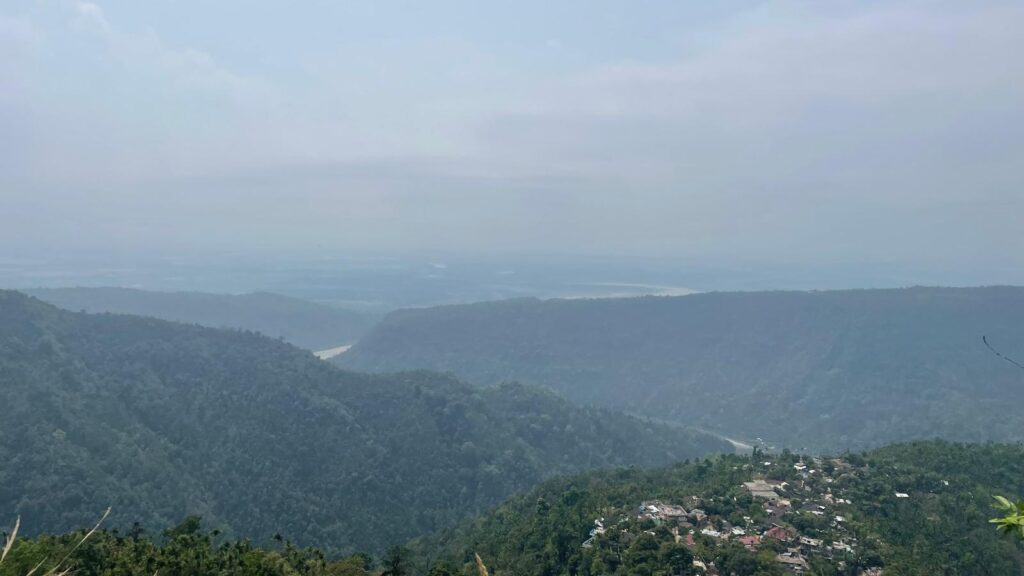
My postdoctoral research—Cultivating Ethics across Generations—documents the history and the everyday ups and downs of an extended War-Khasi family, half of whom live in Bangladesh and the other half in Meghalaya (India). By detailing the family’s past and present, I trace the interplay and transformation of ethics and kinship across generations, paying special attention to forms of care, practices of succession, the production and transmission of knowledge, as well as the interconnectedness of belonging and becoming. I also examine how the political and social contexts in which the two families are embedded change over time.
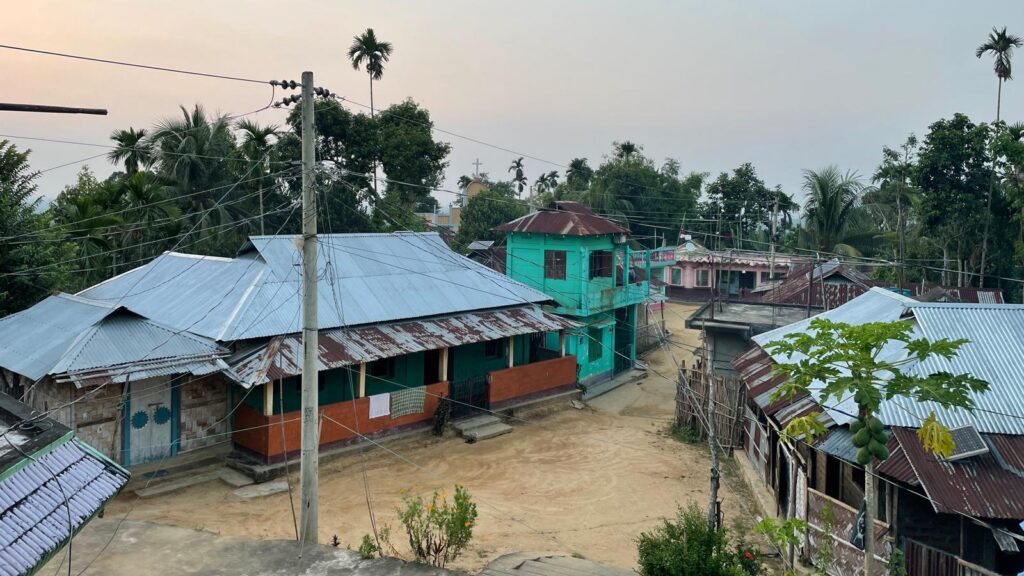
The project challenges established historical narratives by recounting the region’s history from the perspective of an indigenous minority family. Empirically, I draw on ethnographic material—everyday observations and discussions, biographies, and family narratives—as well as archival documents. The combination of these sources enables a rich depiction of contemporary everyday life while also documenting personal, familial, and regional histories with ethnographic depth. To convey these layered histories, I employ a writing style that places the biographies of family members at the centre while unfolding the familial and regional stories that accumulate around them, gradually revealing the broader historical context. Since family members from five different generations participate in the research, the project spans approximately one hundred years of history.
2012 – 2017
Land, Life and Emotional Landscapes: Politics of Survival at the Margins of Bangladesh (dissertation)
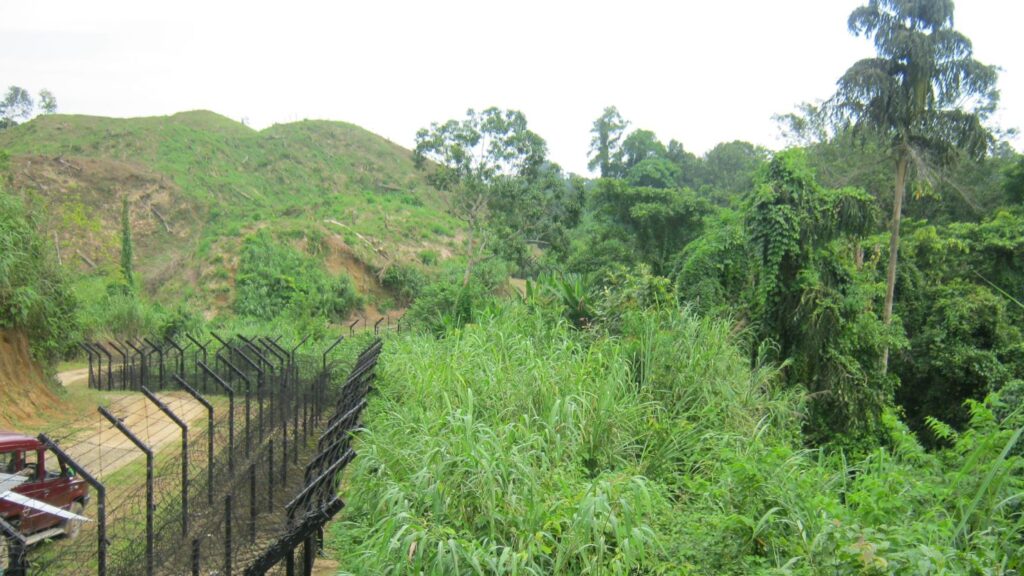
My first extended ethnographic research project in Bangladesh examined the causes and consequences of land dispossession in the northeastern border areas adjoining the Indian states of Meghalaya, Assam, and Tripura. Through four comparative case studies, I mapped the everyday struggles of indigenous farmers threatened with the loss of their land due to such state programmes as the realignment of the national border, eco-tourism, social forestry and the establishment of a military cantonment. By focusing on everyday conflicts, I examined how farmers experienced state violence and developed subtle yet creative acts to navigate the disruptions that unsettled their daily lives.
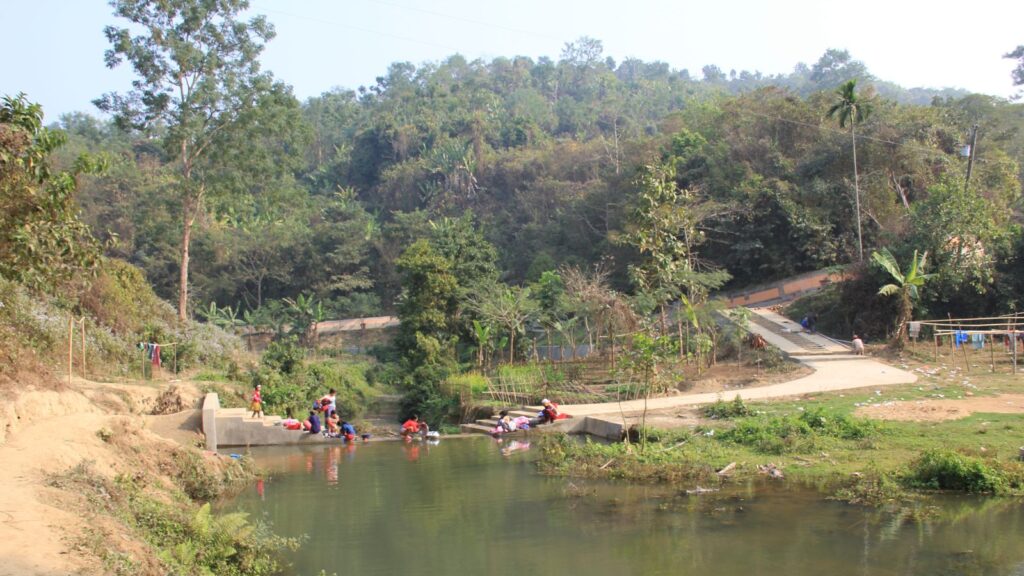
The core of my argument was that land dispossession in Bangladesh’s northeastern borderlands is best understood through political practices centred on questions of life. Land emerged as the surface upon which conflicts between farmers and state actors over competing imaginations and legitimacies of life were played out. Placing existential concerns at the core of my analysis and drawing on the anthropology of life and violence, I offered an alternative understanding of land dispossession that moves beyond materialist explanations, showing that being deprived of land means facing the danger of losing one’s very place in the world. The results of this research were published in a peer-reviewed monograph, two peer-reviewed articles, and one working paper (see publications).